
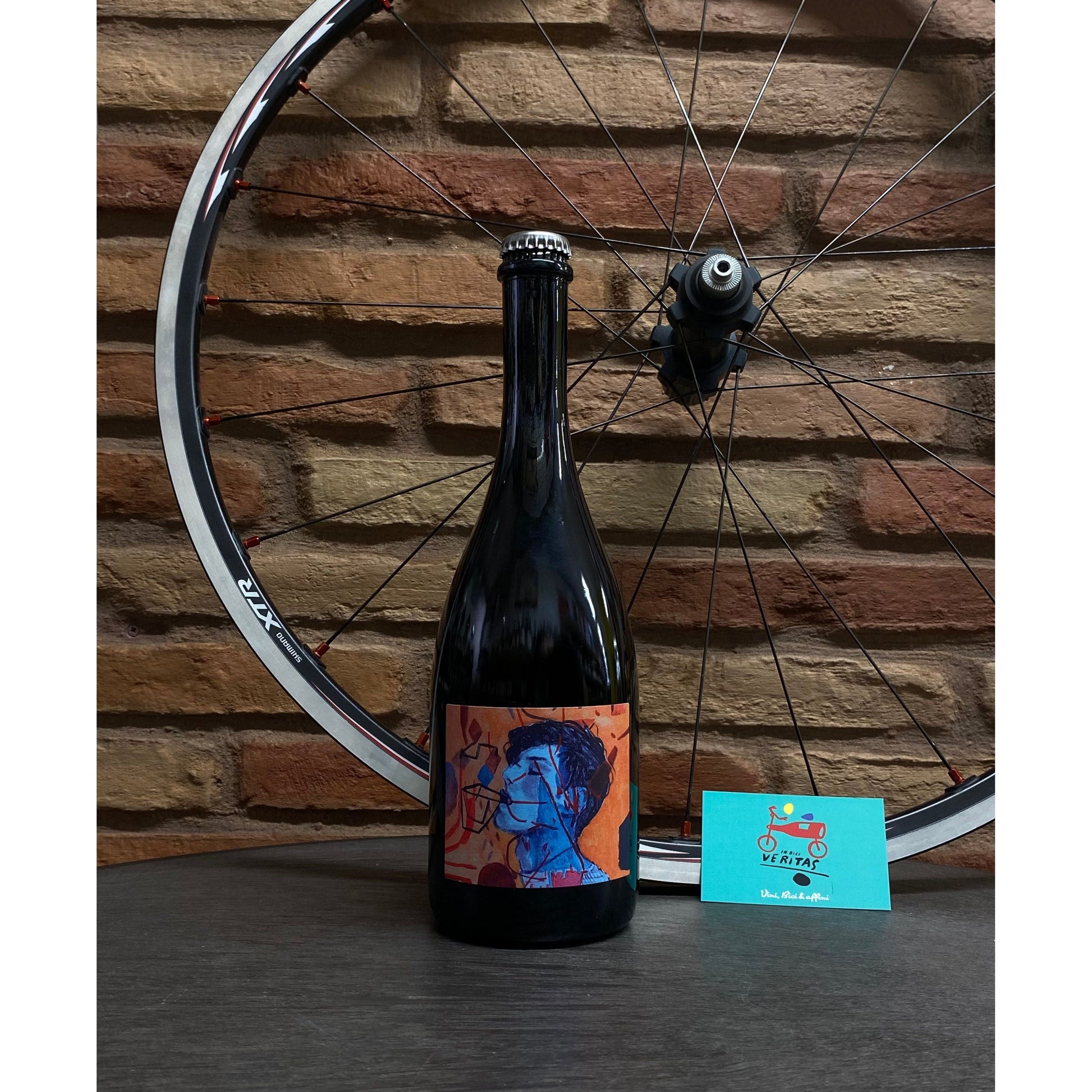
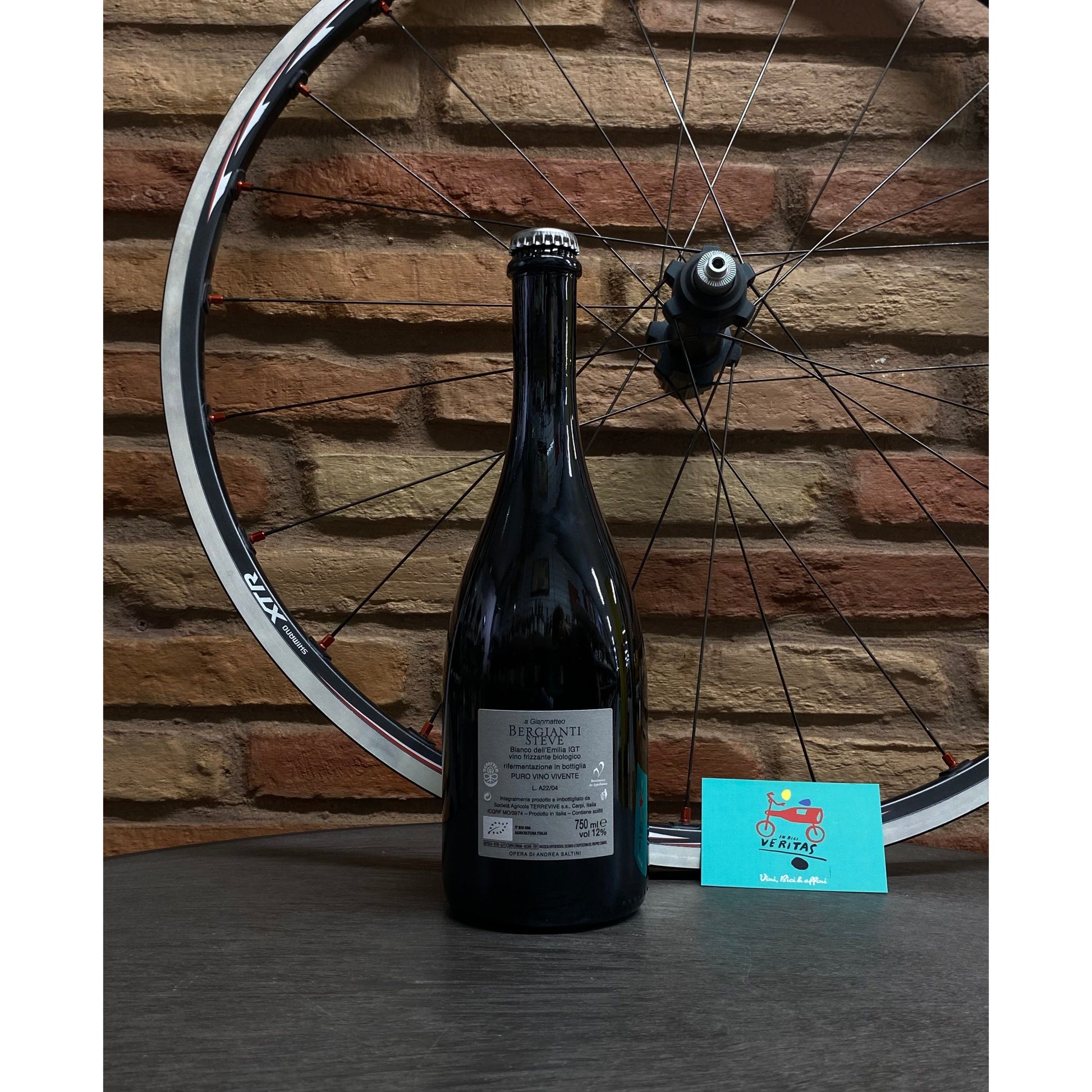
SA Terrevive - Bergianti Steve 2022
SA Terrevive - Bergianti Steve 2022
Company history
Gianluca Bergianti is the driving force behind Terrevive, a biodynamic farm founded in 2008 in Gargallo di Carpi, in the Modena plain. The company began with 16 hectares of land, approximately 10 of which are vineyards, in the traditional lands of Lambrusco. Gianluca, a native of the area, after his studies and work experience, decided to revive the family's agricultural vocation by focusing on natural methods and the concept of a multifunctional farm: Terrevive is not just a vineyard, but also a vegetable garden, an orchard, a farmyard animal farm, and an educational farm. This holistic approach takes inspiration from the model of the old Emilian farmhouses, integrating it with the principles of biodynamics. In a short time, the
Bergianti wines—particularly the bottle-fermented Lambruscos—began to gain recognition among natural wine enthusiasts, first in Emilia and then abroad. A turning point came in 2014, when Gianluca introduced his ancestral Lambrusco outside the region, generating considerable interest in a style of Lambrusco distinct from the industrial version. In 2018, the company began collaborations with niche international distributors, consolidating its presence in foreign markets (Japan, Northern Europe, and the USA). Today, Vini Bergianti—as Terrevive wines are known—represents a benchmark for the revival of artisanal Lambrusco. Gianluca continues to run the family-run business with his wife and a small team, deliberately keeping production limited to a few tens of thousands of bottles to ensure high quality and consistency with natural methods.
Production philosophy
Gianluca Bergianti's production philosophy is based on the principles of biodynamics and environmental sustainability. Since the beginning (2008), Terrevive has rigorously followed the biodynamic method, with practices such as green manure, biodynamic preparations and respect for the lunar calendar. The company is certified organic and applies the Demeter principles in the vineyard. One of the pillars is the creation of a complete agricultural organism: in addition to the vine, vegetables, cereals, fruit are grown and animals (geese, sheep) are raised which contribute with their fertilizer and by keeping the grass short. This polyculture enriches the
The company's biodiversity is enhanced and the need for external inputs is reduced. Bergianti believes in natural balance: it uses no herbicides or chemical pesticides in the vineyards, only treatments based on copper and sulfur in homeopathic doses (and tries to avoid them altogether in favorable years). Soil work is minimal: grassy rows and light plowing, with legumes sown at the end of the harvest for spring green manure that enriches the soil. All management is manual, from pruning to harvesting, so that human hands can follow the vine in its natural cycle. In the cellar, the philosophy is "zero intervention": spontaneous fermentations without selected yeasts, no fining or filtration, and no added sulfites (except for a symbolic dose at the bottling of some wines).
Bergianti is bottle-fermented according to the ancestral method: Gianluca rejects the use of an autoclave (Charmat method) typical of industrial Lambruscos, preferring to induce secondary fermentation in the bottle by adding a sweet must from the same vintage before bottling. This choice is so distinctive that one of the wines is provocatively named "No Autoclave."
The natural refermentation and the absence of filtration mean that the wines can appear cloudy or with sediment, and with a pressure that is often more delicate than conventional Lambruscos, but with lively and integrated bubbles.
Bergianti vinifies grapes from different parcels separately to enhance their unique characteristics, intervening as little as possible: his role, he says, is to "accompany the grapes to become wine" without forcing them. This production philosophy, combined with his enthusiasm for the potential of the Emilian terroir, makes Bergianti's wines authentic and revolutionary expressions in a landscape—that of Lambrusco—often dominated by standardization.
Cultivated vines
The company is located in the homeland of Lambrusco, and in fact the grape varieties grown are mostly traditional Lambrusco varieties. Specifically, Gianluca Bergianti works with: Lambrusco di Sorbara – a pale red-skinned grape that produces rosé wines with a pronounced acidity and finesse; Lambrusco Salamino di Santa Croce – so named for the elongated shape of the bunch, which adds color and fruit; and Lambrusco Grasparossa (a small percentage found in some vineyards), with its dark, tannic skin that adds structure. In addition to these, he cultivates ancient minor varieties often historically included in peasant Lambruscos: for example, Ancellotta, a very colorful dyeing grape (present in the wine blend).
"Stiolorosso"); Lambrusco Oliva, a rare local subvariety with a curious name; and perhaps a few rows of Trebbiano Modenese (a white grape traditionally used in blends). It's worth noting that in Terrevive's fields, the vineyards coexist with other crops: wild herbs and flowers grow between the Lambrusco rows, while fruit trees and vegetables grow nearby. This agricultural promiscuity allows even different grape varieties to coexist: for example, for some wines, Gianluca uses a small balance of local aromatic white grapes (such as Malbo Gentile Bianco or other rediscovered old varietals) to add complexity. The focus, however, remains on pure Lambrusco: Bergianti believes in the potential of this often underestimated family of grape varieties. All the vines are trained using the low spurred cordon or traditional Guyot system, on sandy and loamy soils typical of the lowlands, where Lambrusco has always thrived.
Yields are moderate compared to the local average (Gianluca practices short pruning and thinning when necessary) to concentrate aromas and acidity. Harvesting is done by hand, using crates, with each variety staggered at the optimum point: the Sorbara, which is earlier in the growing season, is often harvested slightly earlier to preserve its vibrant acidity, while Salamino and Grasparossa are harvested later to achieve phenolic maturity.
This care in managing the different grapes allows Bergianti to create balanced cuvées without the need for external corrective measures.
Production areas
Map of Lambrusco appellations in Emilia: the province of Modena (center) is the birthplace of Lambrusco di Sorbara, Salamino di Santa Croce, and Grasparossa. Gargallo di Carpi is located in the northern Modena area.
Terrevive is located in Emilia-Romagna, in the northern part of the province of Modena, specifically in Gargallo di Carpi, on the plains. This area is part of the historic production district of Lambrusco di Modena, a land of sparkling red wines traditionally served in Emilian trattorias. The Bergianti vineyards fall primarily under the Lambrusco di Sorbara DOC and Lambrusco Salamino di Santa Croce DOC appellations, two of the main DOCs of Lambrusco Modenese (both fall partly within the municipal territory of Carpi). The map above illustrates the areas: Sorbara to the northeast of Modena along the Secchia River, Salamino di Santa Croce to the northwest towards Carpi, and further
Grasparossa on the hills to the south. The Terrevive vineyards are located right in the "triangle" between Carpi, Soliera, and Novi, a flat area rich in water (irrigation canals, ancient riverbeds) and characterized by sandy-loam alluvial soils poor in clay. This light soil gives the Lambrusco wines from this area great aroma and finesse. The climate is continental-Po: cold, foggy winters, hot, muggy summers, with a good temperature range in September that favors the synthesis of aromas and maintains acidity. Bergianti, while following the DOC regulations for grape varieties and area, often comes up with more generic classifications (such as "Lambrusco dell'Emilia" IGP) in order to have greater freedom in ancestral production techniques. For example, some of its refermented sparkling wines do not fall within the
parameters of the DOC Lambrusco (which historically required refermentation in autoclave): Gianluca then markets them as IGP, proudly claiming however the “Modena” origin. Moreover, his winery wants to restore dignity to the peasant Lambrusco of these areas: the Modena plain, too long associated with sweetish mass-produced wines, thanks to producers like Bergianti is rediscovering the
its vocation for dry, territorial and authentic wines.
Most representative wines
Gianluca Bergianti's wines are primarily bottle-fermented Lambruscos, each with its own identity tied to its grape variety and vineyard. Among the most representative is "San Vincent," a sparkling rosé made from 100% Lambrusco di Sorbara. The name and style are a tribute: during a study trip to Champagne, Gianluca discovered that his Sorbara rosé bore a striking aromatic resemblance to certain Pinot Meunier rosés. "San Vincent" recalls the feast of Saint Vincent (January 22nd, the patron saint of winemakers), which occurred during that trip, and represents a Lambrusco di Sorbara.
As fine as a classic method sparkling wine, with notes of pomegranate, rose, and a distinctive mineral salinity. Another iconic wine is the aforementioned "No Autoclave," a dry, sparkling red Lambrusco: it is made from a blend of Lambruscos (predominantly Salamino and Sorbara) naturally refermented in the bottle. It is a Lambrusco with a light ruby color, a lively but not aggressive foam, aromas of violets and berries, and a dry, agile flavor, far removed from commercial sweet Lambruscos. "PerFranco" is another
A distinctive label: a red Lambrusco dedicated to a deceased winemaker friend (or, according to others, a play on words, "per Franco," paying homage to the native wine made from indigenous yeasts). It has a more substantial structure, tannins, and complexity, often obtained from a single vineyard of old Salamino clones. "Stiolorosso," on the other hand, is a special project: it is the Lambrusco of an old farmer, Gabriele Ronzoni of Stiolo, whom Gianluca took over after his death to preserve the tradition. Stiolorosso is a refermented red obtained from three ancient local varieties (Lambrusco Ancellotta, Oliva, and Sorbara) from vines over 60 years old. It is a rustic and charming wine, darker, deeper, and earthier in color, representing the link with the past of viticulture in the Reggio Emilia and Modena area. The range is rounded out by a sparkling white Lambrusco (made by vinifying Sorbara grapes without the skins, resulting in an unusual, citrusy, and floral sparkling wine) and small, experimental productions, such as an ancestral Trebbiano refermented using the pet-nat method. All Bergianti wines are rigorously dry, with barely perceptible residual sugar, to enhance acidity and drinkability. It's important to note that these bottles often have a yeast sediment (they're "sur lie") and can become cloudy: Gianluca suggests not shaking them before opening to serve a clear wine, or "shaking them vigorously" to resuspend the sediment and enjoy the wine in a rustic style. It's part of the fun and charm of these natural Lambruscos, finally authentic ambassadors of their terroir.
Relevant awards or recognitions
As a niche winery, Bergianti doesn't receive the usual accolades from prestigious guides, yet it has received significant recognition in the natural wine world and beyond. The Slow Wine guide has included Terrevive among its reviewed wineries, repeatedly awarding its Lambruscos the Vino Slow label (indicating wines that combine sensory quality and territorial value). For example, the 2016 San Vincent was singled out as a Vino Slow for its originality among Emilian sparkling rosés. In France, the magazine Le Rouge et le Blanc (an authority on natural wines) dedicated an enthusiastic article to Bergianti's Lambruscos, helping to introduce them to enthusiasts across the Alps. Gianluca has also been invited as a guest to events such as Vini di Vignaioli in Fornovo and RAW Wine in London, leading international fairs for natural wine, receiving praise from the public and independent critics. In 2020, the Vinibuoni d'Italia guide (Touring Club) awarded the Corona – the highest recognition – to the Lambrusco “PerFranco” 2018, indicating it as one of the best sparkling wines of the year for its typicality and emotion. The local press also
Bergianti praised: the Gazzetta di Modena newspaper called him “the guardian of ancestral Lambrusco”.
Although not yet recognized by generalist guides like Gambero Rosso (which rarely include artisanal Lambruscos), Terrevive's attention is steadily growing: in 2023, Forbes Italia named Gianluca Bergianti among the "5 emerging winemakers to watch" in the Italian natural wine movement. This indicates that his work is gradually gaining deserved recognition even beyond the circle of specialists.
Curiosity
The story of Gianluca Bergianti is that of a young farmer who, armed with idealism, revolutionized a wine style. A curious anecdote concerns the genesis of the San Vincent wine: during the trip to Champagne that inspired that rosé, Gianluca had a skeptical Champagne producer taste his Lambrusco di Sorbara. Incredibly, she had to admit that it had aromas similar to a rosé from beyond the Alps. This transalpine surprise was for Gianluca confirmation that his territory could aspire to quality, and the name San Vincent celebrates the patron saint of French winemakers who "blesses" an Emilian Lambrusco! Another curiosity: Bergianti named one of his wines "VB" after
White wine or, jokingly, balsamic wine, because it's made from Trebbiano grapes, the same ones used for Traditional Balsamic Vinegar of Modena. It's a tribute to local traditions: in fact, Gianluca also produces a small amount of his own balsamic vinegar, according to peasant custom. The No Autoclave label has become a catchphrase among enthusiasts: it directly expresses the philosophy of rejecting industrial production (where the autoclave is a symbol of accelerated sparkling wine production) in favor of the traditional method.
Artisanal. Bergianti is also known for his social commitment: his farm is open for educational tours, he hosts schoolchildren to introduce them to the countryside, and he collaborates with associations to include people with disabilities in agricultural work. This "ethical" side completes the picture of a producer strongly tied to the values of the land. Finally, it's worth mentioning that Gianluca is a fervent supporter of natural Lambrusco in all its forms: he's often seen pouring his wines at fairs alongside bottles from young colleagues, promoting not only himself but the entire artisanal Lambrusco movement.
His passion and his smile as he explains in dialect to customers how “al mè lambròsch l'è fat cme na vólt” (my Lambrusco is made like it used to be) are distinctive elements that remain imprinted on those who meet him, and make his wines even more communicative and “human”.
Couldn't load pickup availability

