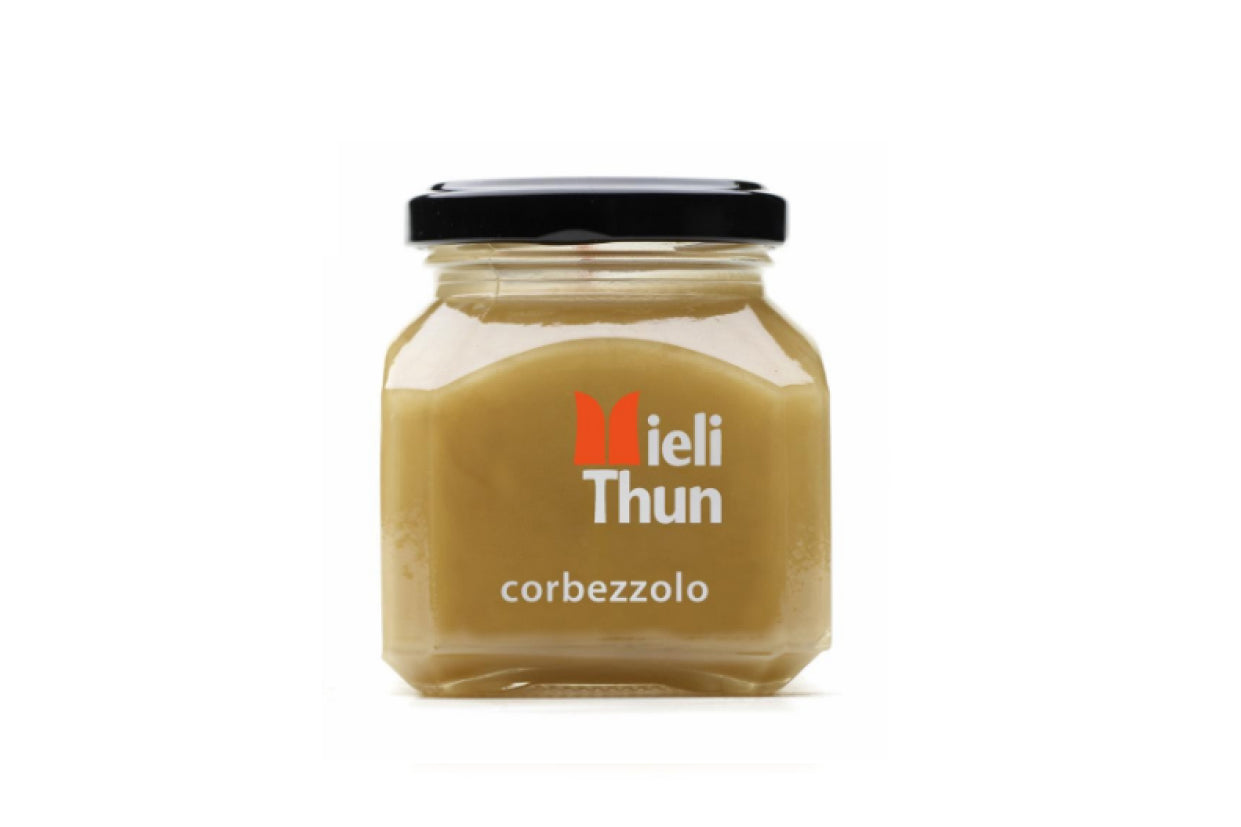
Honey - Strawberry Tree Honey - Thun Honey
Honey - Strawberry Tree Honey - Thun Honey
Strawberry Tree Honey:
Among Italy's most iconic honeys, rare and complex, with an unmistakable bitterness. The aroma recalls aromatic herbs and notes of coffee and brown caramel; the flavor is intense, dry, and persistent. Highly sought after by enthusiasts and gourmets.
Perfect with aged pecorino cheeses, blue cheeses, bitter cocoa and gastronomic preparations.
Main features
• Origin: Mediterranean scrub, Sardinia
• Color: dark amber
• Taste: complex, bitter, toasted
• Physical state: crystallized
The Plant:
Each monofloral honey comes from a specific plant, with its own flowering cycle, natural habitat, and unique nectar composition. Knowing the plant helps us understand the aromas, colors, and structure of honey, because nectar is influenced by soil, climate, altitude, and surrounding biodiversity.
Strawberry tree (Arbutus unedo)
A typical Mediterranean shrub, it thrives in poor soil, rocks, and salty winds. It flowers in autumn—an almost unique characteristic—while the previous year's fruit is ripening on the same plant.
Nectar contains bitter compounds (arbutin, phenols) that give honey its unmistakable bitterness.

Thun Honey:
Mieli Thun is one of the most respected beekeeping companies in Italy, founded in Trentino and specializing in the production of pure monofloral honeys. The company practices nomadic beekeeping , moving its hives to over sixty selected sites throughout Italy to monitor the blooms at their optimal time.
Each honey comes from a single, recognizable bloom , harvested without heat treatment, preserving its aromas, enzymes, and botanical identity. This approach allows for honeys that faithfully reflect the landscape, season, and plant from which they originate.
The company's philosophy is based on three principles:
• Pure ingredient , unpasteurized and unrefined.
• Territoriality , with collections in selected and uncontaminated places.
• Transparency , from the choice of sites to honey extraction and maturation.
The result is a collection of honeys that does not seek standardization, but enhances biodiversity and the unique character of each vintage and each territory .
Couldn't load pickup availability