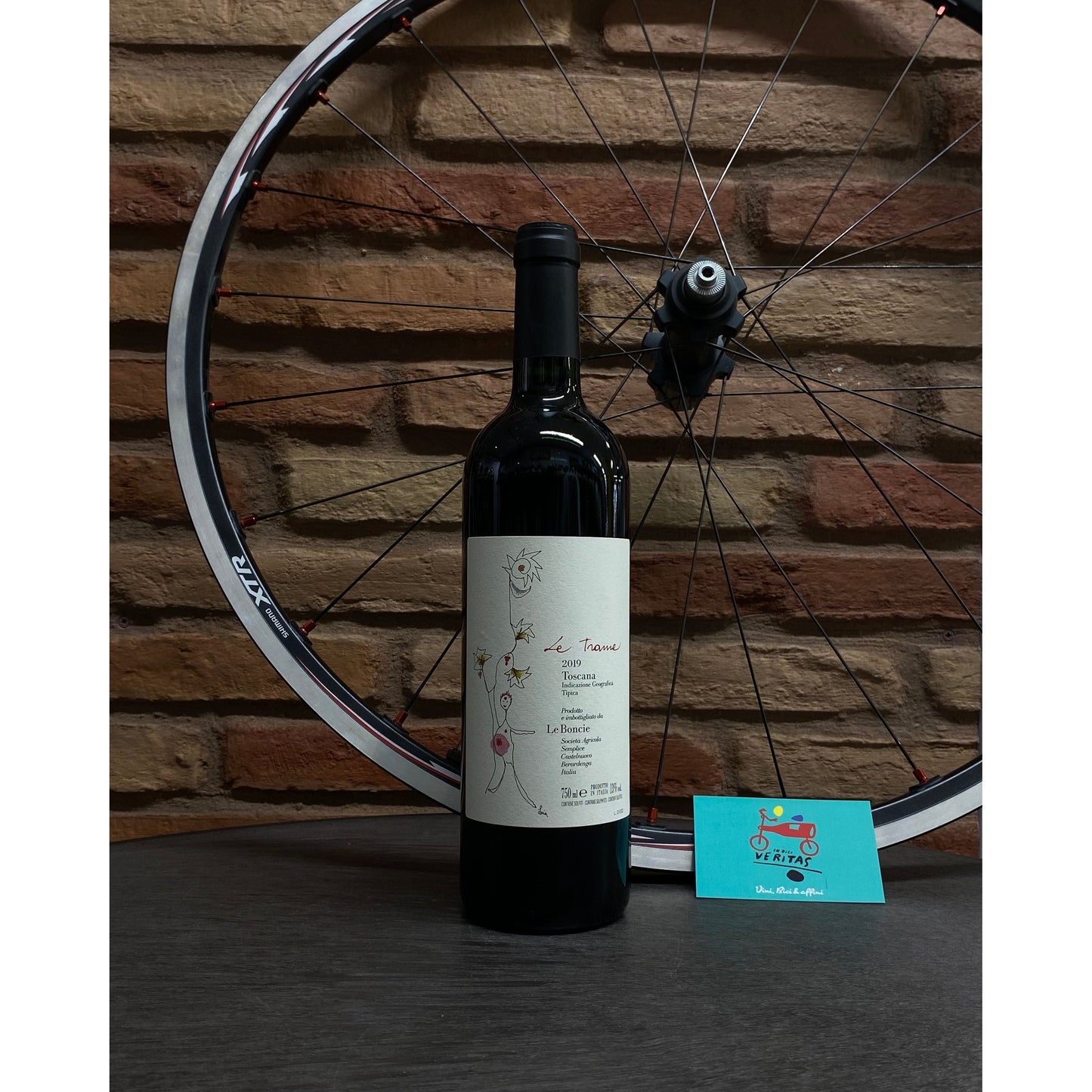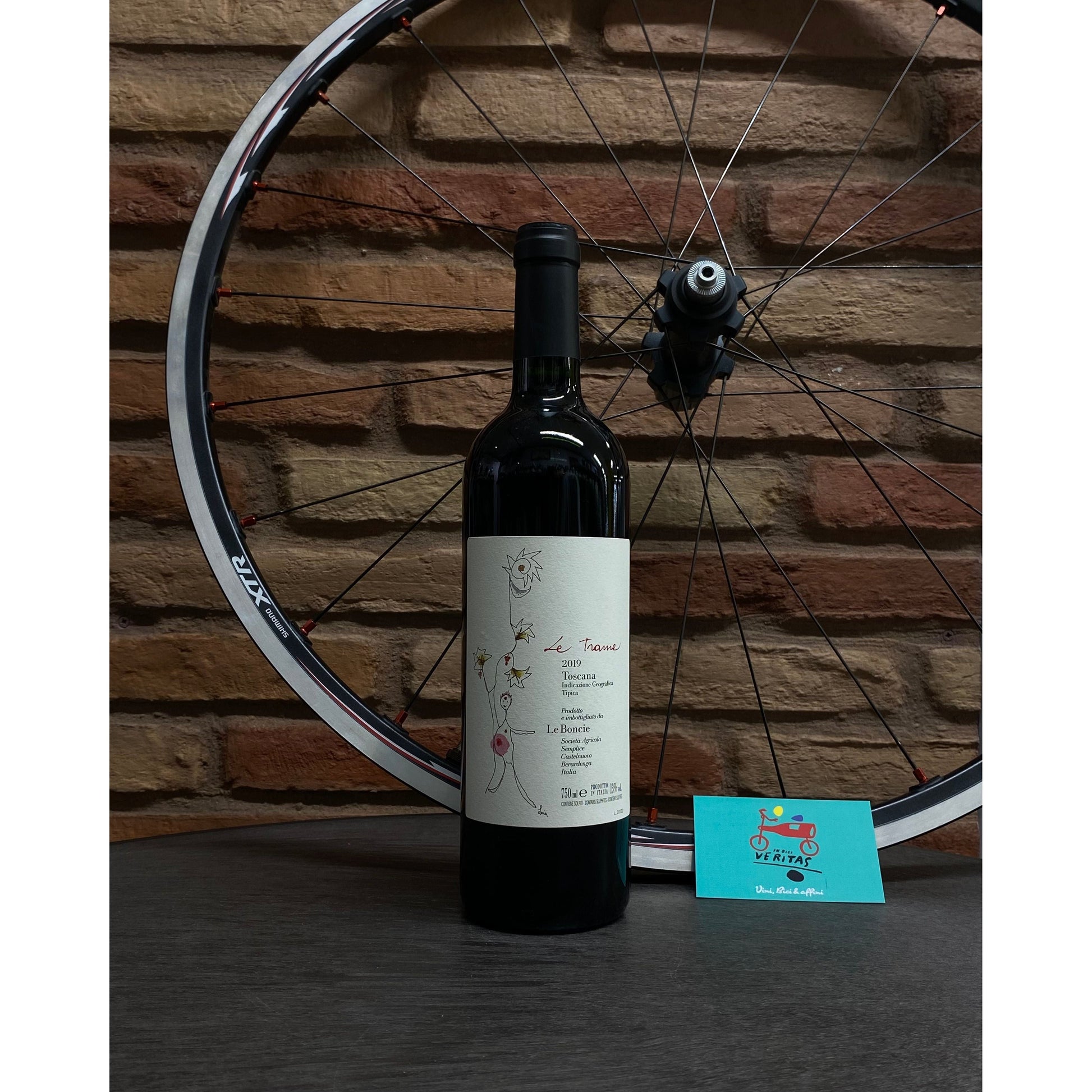
Le Boncie - “Le Trame” Tuscany 2019
Le Boncie - “Le Trame” Tuscany 2019
Le Trame follows the guidelines of a Chianti Classico, but due to disagreements with the Chianti Classico consortium, Giovanna Morganti decided to produce only IGT wines, without adhering to the regulations. Made almost exclusively with Sangiovese and a small blend of Canaiolo, Colorino, Mammolo, Foglia Tonda, and Ciliegiolo, it is grown as bush vines on soils rich in alberese. The vineyard is densely planted with approximately 7,000 vines per hectare and managed biodynamically.
Fermentation is spontaneous with indigenous yeasts and takes place in open wooden vats with 15-20 days of maceration. The wine then ages for approximately 24 months in large 500-hectoliter wooden barrels.
It's not an immediate wine, but it is a genuine interpretation of the San Felice terroir, with an elegant and dense structure, a wine that rewards the patience of those who know how to wait for it, in the bottle and in the glass.
Giovanna Morganti of Podere Le Boncie is considered one of the most authoritative voices of the new generation of Tuscan winemakers. Daughter of winemaker Enzo Morganti (a key figure in Chianti in the 1950s and 1960s), in 1980 she inherited the small "Le Boncie" estate from her father, nestled in the woods of San Felice. Today he manages 4 hectares of hillside vineyards at 350–400 m above sea level (in addition to olive trees), planted at a high density (7,000 vines/ha) and trained as bush vines. In these vineyards, Morganti grows Sangiovese along with blends of local varieties (Ciliegiolo, Colorino, Foglia Tonda, Mammolo, and Prugnolo), a practical revival of traditional Chianti systems.
From an agronomic perspective, Podere Le Boncie represented a provocation of authenticity : Morganti "reclaimed" these few hectares from industrial winemaking, dedicating himself to low-input, sustainable agriculture. His philosophy is reflected in the winery: he vinifies without selected yeasts (only spontaneous fermentations in open oak vats), macerates traditionally (10–20 days), follows long maturation in large barrels, and drastically limits treatments. His wines are described as "true, authentic" and "an act of love towards the terroir."
With Podere le Boncie, Giovanna Morganti has contributed to enhancing the historic identity of Chianti Classico. Since the 1990s, she has been among the founders of the natural wine movement in Italy, forcefully reflecting on the role of the producer and openly criticizing market impositions. Thanks to her work, Podere Le Boncie is recognized as one of the most interesting "traditionalist" estates in the area and has inspired other small producers to rediscover ancient grape varieties and respectful agricultural practices.
The agronomic method is based on organic and biodynamic principles. The soil is worked mechanically (annual plowing) to preserve its vitality, without weed killers or chemical fertilizers. The vines, trained as bush vines on ancient layouts, are severely pruned to control yield and obtain high-quality grapes. In the winemaking process, everything is natural: only indigenous yeasts are used, spontaneous fermentation occurs in open vats, and the wine is aged in used wooden barrels. Morganti avoids any invasive oenology (no fining or forced filtration) to allow the wine to fully express its terroir. In this way, she intends to "protect the integrity" of the vineyard and the landscape, believing that wine should reflect the place , not modern techniques.
Couldn't load pickup availability