Aceto Balsamico di Modena DOP Centenario - Limited and numbered edition
Aceto Balsamico di Modena DOP Centenario - Limited and numbered edition
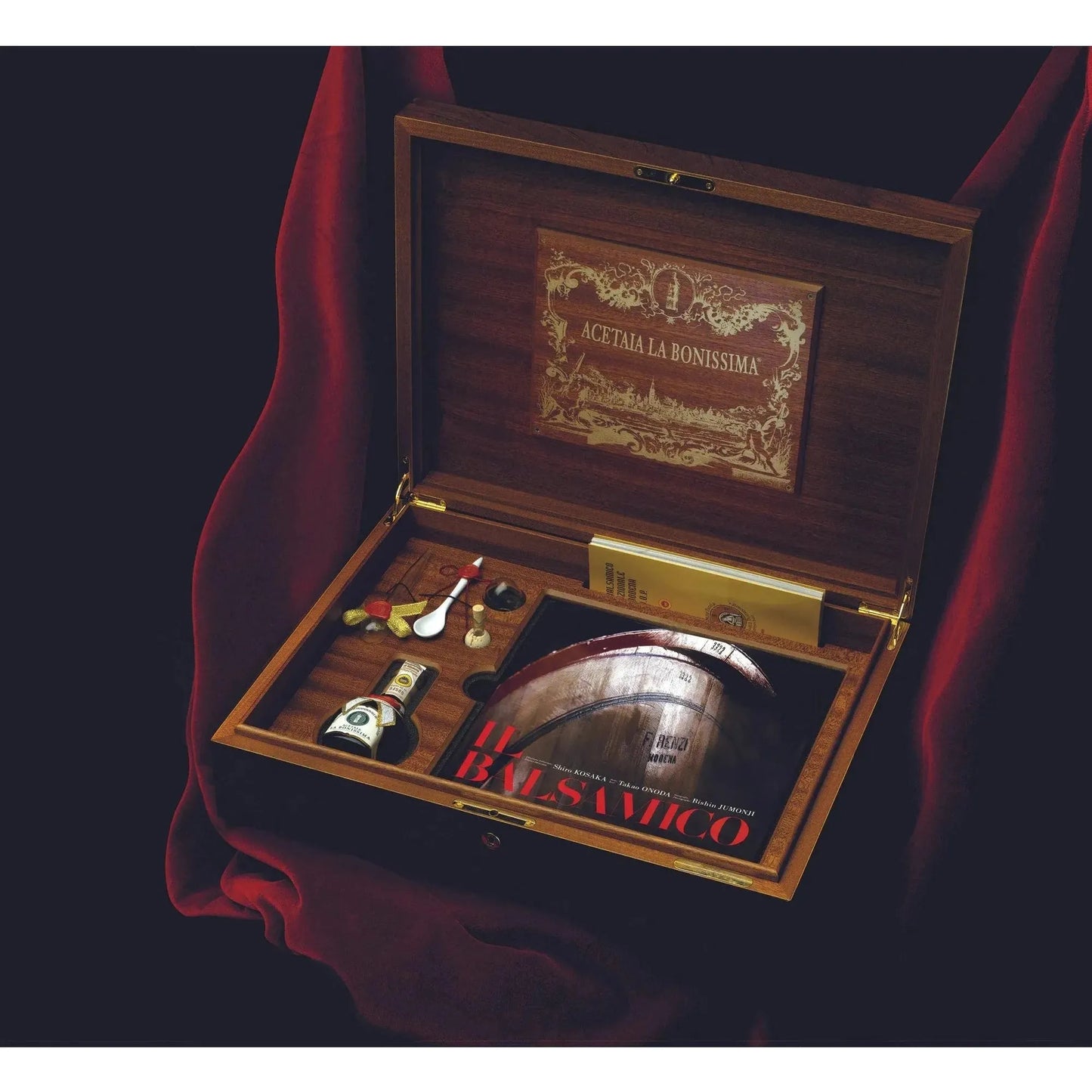
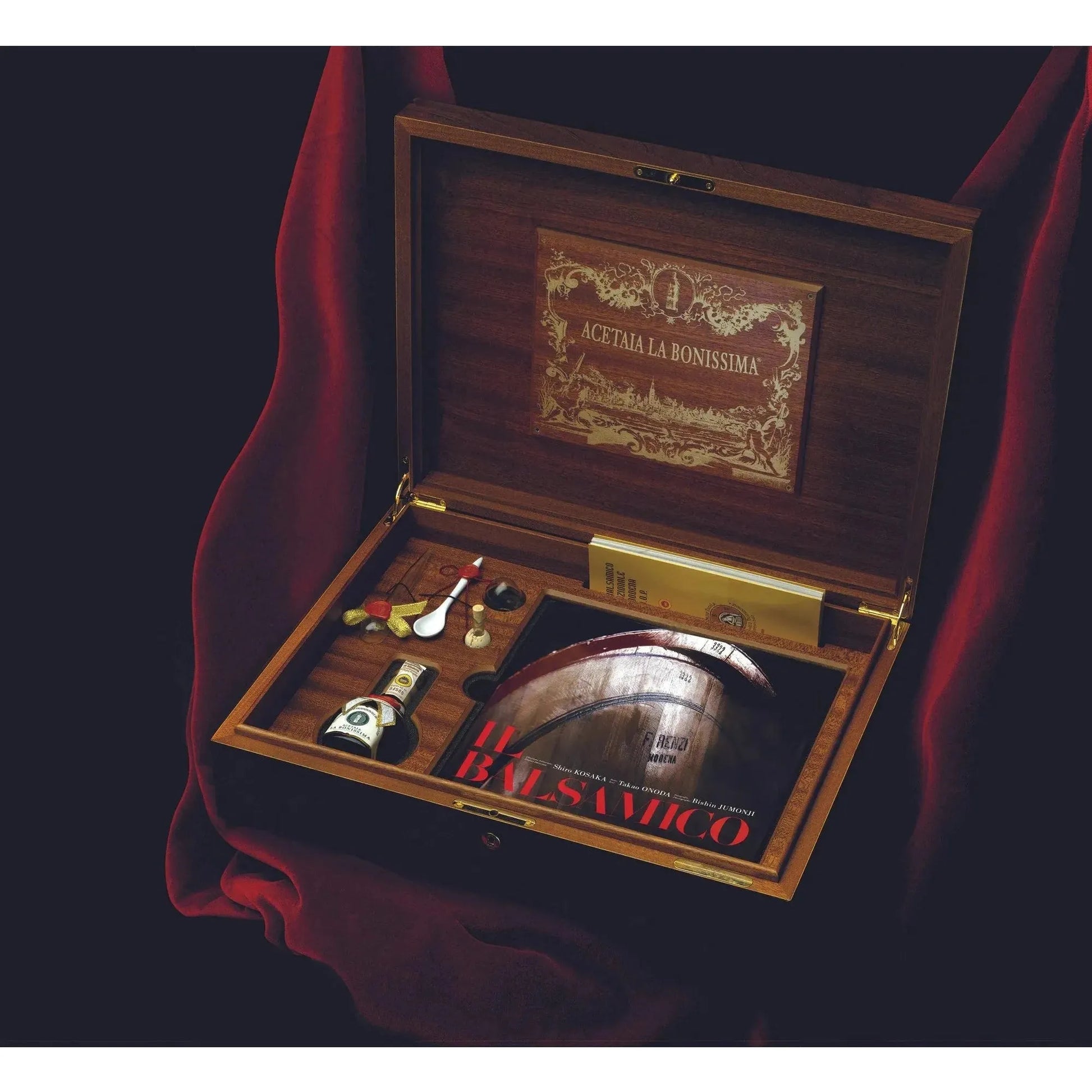
This precious box, produced in a limited edition of 50 pieces in walnut wood, hand-built and varnished in seven layers like luthiers varnish concert violins, contains a treasure that is more unique than rare.
Alongside specific accessories intended for tasting the precious centenary Balsamic Vinegar of Modena DOP and a historical volume which tells the story of the De Pietri family, the Consortium for the Protection contains Centenary Balsamic Vinegar of Modena DOP, specially taken in minimal quantities from a centenary barrel jealously guarded by the Acetaia La Bonissima.
To be tasted in small drops like a meditation elixir.
Acetaia La bonissima is the culmination of a history of passion for the Modena area and its products by the De Pietri family, in particular for balsamic vinegar. The main product of the area and which, together with cars, has made the city famous throughout the world.
One of the most historic vinegar factories in the Modena area, boasting a centuries-old past and extremely high quality standards.
The company produces both the Modena PGI balsamic vinegar, which can be produced with a percentage of cooked grape must and a small percentage of wine vinegar, and the traditional Modena PDO balsamic vinegar, the most precious in the world, which can only be produced with cooked grape must.
Only Lambrusco, Sangiovese, Trebbiano, Albana, Ancellotta, Fortana and Montuni grapes are used for the cooked must . Acetaia La Bonissima ensures that the grapes come only and exclusively from local farms.
"La Bonissima", as it is called by the people of Modena, is a statuette symbolizing the city of Modena erected in the 12th century, in the corner of the building that houses the Town Hall. It is said to depict a lady who, according to some, was supposed to hold a scale, a symbol of the correctness of weights, measures and the good quality of goods, while others say that, during a great famine that struck the city of Modena, a noblewoman ensured the survival of the poor starving by giving out grain and food in quantity.
This statuette was erected in the 12th century as a perpetual reminder of that gesture; since then it has been one of the symbols of the city most loved by the people of Modena.Couldn't load pickup availability